

Why Should I Consider Forgiveness?
Forgiveness isn’t a word often used these days. And when it is, the pain we feel from the trauma or betrayal goes too deep to even consider. Yet, I’ve learned that stuffing doesn’t fix anything.
I’ve learned from experience that stuffing is not equal to healing. Eventually the stuffing begins to ooze out all over the place, much like that suitcase I filled too full. As my suitcase is jostled and dropped, it eventually busts wide open to expose everything I wanted to stay hidden.
BEFORE I BEGIN
I’m not a professional, and I understand that healing from trauma and betrayal may require time and professional help before forgiveness is possible. With that, I have experienced the internal peace that comes with forgiveness.
Also, if you currently live in trauma without safety, I pray that God would move on your behalf so you may see his care for you and experience his power at work on your behalf. Please don’t stay there once you see the way out!
I also pray that God grant you someone to help you navigate the pain you’ve endured so that you can begin to heal. If you have sought help and have had little relief, there are many stories of people whom God has healed from PTSD.
I too have experienced his healing from PTSD over time and have shared pieces of my story in other posts. Because of my own need in the last year to heal and make choices regarding forgiveness, I have done a lot of soul-searching and some study on forgiveness–what it is and what it isn’t. I have become greatly aware that to find healing eventually requires the choice to forgive. But first let me clarify what I mean by forgiveness.
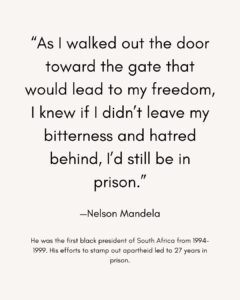
FORGIVENESS
- Never justifies the perpetrator or what they’ve done. God saw it all and promises he himself to take vengeance.
- Never eliminates the need for restitution.
- Never means you need to stay with or return to the perpetrator so they can continue to abuse. Safety is never ignored by true forgiveness. (Church leaders should NEVER advise anyone to stay with an abusive spouse or parent in order “to submit and forgive”.)
- Doesn’t assume a time-frame. (If the events caused deep emotional wounds or trauma, you may need outside help to process the events and your emotions/trauma to be able to forgive.)
FORGIVENESS ALWAYS ASSUMES
- The perpetrator doesn’t deserve forgiveness.
- The choice to forgive is for the benefit of one emotionally wounded or traumatized to find inner peace and healing.
- “I refuse from this time forward to be emotionally enslaved to the one who traumatized me.” (Refusal to forgive keeps the traumatized emotionally chained to the perpetrator and events that traumatized.)
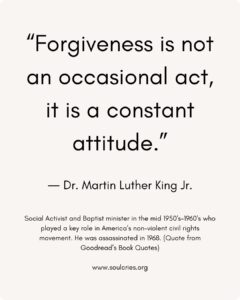
SCIENTIFIC STUDIES ON THE POWER OF FORGIVENESS
As I researched for this article, I found many quotes both for and against forgiving those who’ve deeply wounded you. I also read about overwhelming scientific evidence (abstract by NIH, Harvard Medical School, Johns Hopkins Medical School) that suggests that the choice to forgive benefits the forgiver.
Practicing forgiveness can have powerful health benefits. Observational studies, and even some randomized trials, suggest that forgiveness is associated with lower levels of depression, anxiety, and hostility; reduced substance abuse; higher self-esteem; and greater life satisfaction. Yet, forgiving people is not always easy. From “The Power of Forgiveness” February 12, 2021, Harvard Health Publishing, Harvard Medical School
STORIES OF EXTREME FORGIVENESS
10 Inspiring Stories of Extreme Forgiveness That Will Lift Your Spirits
Faith Gateway article from the book by Eric Metaxas, “7 Women and the Secrets of Their Greatness” entitled, “The Test Of Forgiveness.” The article is about Corrie ten Boom, an Austrian Holocaust Survivor whose family harbored Jews in their home before being caught and sent to the Ravensbrück concentration camp.
NPR News article: “‘It’s For You To Know That You Forgive,’ Says Holocaust Survivor” about Eva Kor, founder of the CANDLES (Children of Auschwitz Nazi Deadly Lab Experiments Survivors) Holocaust Museum and Education Center in Terre Haute, Ind.

WHAT IF I’M NOT YET ABLE TO FORGIVE
Maybe you’re thinking one of these scenarios right now:
- “But I can’t forgive.”
- “I’m still suffering from what they did to me.”
- “What they did was too horrific to be forgiven.”
- “They still don’t care about what they did to me.”
- “But you have no idea what you’re asking me to do.”
To say I understand would be cruel. I can’t even list all I’ve faced and use my life’s experiences as reason for me to sit here and tell you I understand.
Yet, as I contemplate the events of my own life and the pain I’ve experienced even the last year, I’m realizing forgiveness plays a huge role in my ability to experience lasting inner peace and healing.
Please don’t throw out the idea of forgiveness without taking time to consider what you have read here. Forgiveness is meant for you to flourish.
BUT WHAT IF I’M THE ONE WHO NEEDS FORGIVENESS?
You aren’t alone. Every one of us, including me, have been in this place of needing forgiveness. That’s why God’s Word states that:
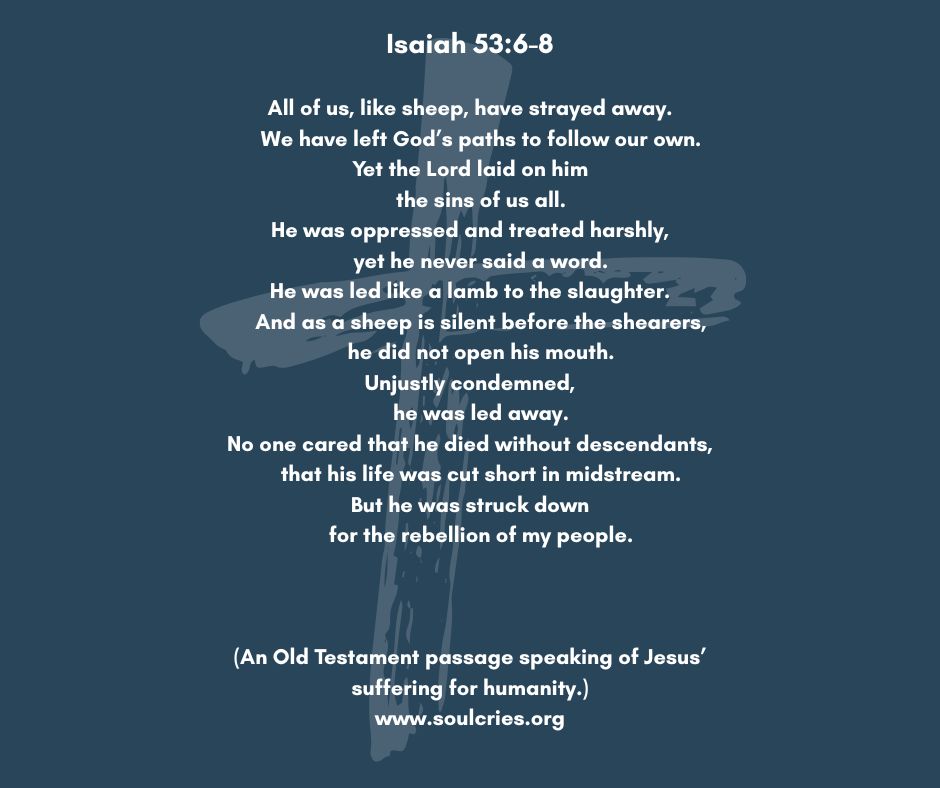
Christ suffered and died for sins once and for all–the innocent for the guilty–to bring you near to God by his body being put to death and by being raised to life by the Spirit. 1 Peter 3:18 TPT
How to Forgive Yourself Even When It Seems Impossible, Real Simple magazine article by Sara Gaynes Levy and Ria Bhagwat, updated May 22, 2025
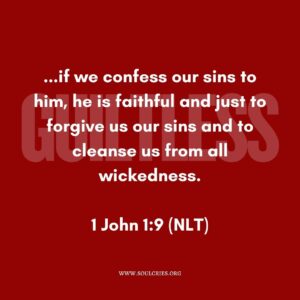
God is the one we truly need the most forgiveness from. Yet, in Christ Jesus, he never refuses to forgive anyone who seeks him and his forgiveness. He is so gracious. Yet, as you seek his forgiveness, you need to know that he then requires you to offer others what you have received from him.
A PERSONAL STORY OF EXTRAVAGANT FORGIVENESS
I sat in the congregation while praise music blared as one-by-one young and old testified of their new life in Christ through baptism in the pool set up at the front of the church. Suddenly I noticed a middle-aged man I knew enter the pool followed by a young man whom the older man was readying to baptise. I had heard the story of how the older and younger had met and sat with tears streaming down my face as I witnessed extravagant love.
The older man and his wife had lost their son several years before to a drunk driver. They decided that rather than live in rage at what had happened, they would choose to forgive. Not only that, they decided they wanted to meet this young man who had squandered their son’s precious life through a moment of sheer stupidity and self-indulgence. They were granted permission to meet their son’s murderer, and share their hearts to forgive. They spent time with this young man over the next several years. Moved by their love, the young man decided to give his life to Christ. This particular morning, as both father and murderer stood together in the baptismal pool, a new family was born and hundreds got to witness extravagant love. Love like Jesus.
WHAT IF THE ONE YOU NEED TO FORGIVE IS GOD?
Talk to him about it. He’s seen your heart all along and would want you to dialogue with him about it. It won’t hurt, and could help. Also, if you’ve been wounded by someone who identified themselves with God, they aren’t God. There are plenty of people who misrepresent him every day. Talk to God about them as well. God longs for you to find restoration with him through Jesus.
STRUGGLING WITH THE PAIN OF FORGIVING
Corrie ten Boom was an Austrian Christian who’s family hid Jews during the Pogroms in Austria. Her father and sister died in concentration camps, and she survived Ravensbruck. This is her story of struggle:
BIBLE BITES REGARDING FORGIVENESS
“Who is a God like you, who pardons sin and forgives the transgression of the remnant of his inheritance? You do not stay angry forever but delight to show mercy.” —Micah 7:18
“If my people, who are called by my name, will humble themselves and pray and seek my face and turn from their wicked ways, then I will hear from heaven, and I will forgive their sin and will heal their land.” —2 Chronicles 7:14
“Be kind and compassionate to one another, forgiving each other, just as in Christ God forgave you.” —Ephesians 4:32

MAY I PRAY FOR YOU?
Father, I know what it’s like to hurt so badly that the thought of forgiveness makes me feel like throwing up. Yet, I’ve also felt the freedom of finally choosing to forgive. Would you please comfort this one who now struggles? Would you reveal your heart toward them and what they’ve been through? Would you come now and intervene on their behalf to help them do what they cannot on their own? Thank you, in Jesus’ name, amen.











Recent Comments